Navigating the USD/JPY Minefield and Intervention Dynamics
The current trajectory of the USD/JPY currency pair presents a complex landscape characterized by aggressive official intervention efforts and underlying strategic ambiguity from global financial authorities. Recent coordinated actions between the United States and Japan have aimed to push the pair lower, yet market participants remain uncertain about the ultimate target levels and the long-term commitment of policymakers. While initial official selling triggered a sharp downward squeeze, the pair quickly established a floor as dip-buyers and bullish momentum stepped back into the arena. Technical traders are closely monitoring crucial psychological and structural barriers, particularly the 159.58 mark, which represents the fifty percent retracement of the recent intervention low. Meanwhile, authorities are keeping a razor-sharp focus on the critical 160.00 threshold, sitting just a short distance away as building momentum tests the resilience of defending central banks. This environment of heightened volatility demands strict risk management and disciplined technical execution rather than reckless position chasing.
Historical Precedents and Macroeconomic Fundamentals
Market history suggests that official currency intervention alone rarely dictates the ultimate trend of a currency without strong macroeconomic fundamentals to support it. Drawing parallels to major historical intervention episodes in 1995, 1998, and 2011 reveals that exchange rates frequently retested or even breached initial post-intervention levels before a genuine, lasting reversal materialized. In each of these past cycles, enduring direction was ultimately forged by shifts in interest rate differentials, economic growth data, or major monetary policy adjustments rather than the initial shock of official intervention. Current market conditions reflect a similar dynamic, where recent softer employment data from the United States reinforces the narrative of cooling domestic fundamentals. Although these evolving macroeconomic indicators provide a more credible foundation for gradual downward pressure on the pair, traders must remain cautious of headline-driven volatility that can temporarily distort price a
Technical Analysis and Key Support Resistance Levels
From a technical perspective, the price action around major threshold levels dictates the near-term trading bias for currency participants. Resistance remains heavily clustered near the psychological 160.00 barrier, where aggressive selling pressure from authorities is anticipated if spot prices attempt an upward breach. On the downside, immediate support rests near 159.58, corresponding to the key retracement level of the prior intervention swing low. A decisive break beneath this immediate support zone could open the door for a deeper corrective move toward secondary support structures. Conversely, failure to sustain downward momentum below these technical floors risks triggering a renewed squeeze toward the upper boundaries. Traders utilizing momentum indicators must watch for volume confirmation and fading volatility spikes to avoid getting caught on the wrong side of sudden policy announcements.
Cross-Rate Positioning and Broader Currency Implications
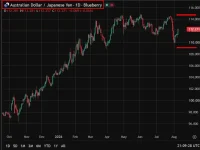
Beyond the primary dollar-yen dynamic, cross-currency pairs offer alternative avenues to express strategic views on broader yen behavior. Institutional positioning has adapted to the intervention landscape by exploring selective long opportunities in cross pairs like AUD/JPY, taking advantage of structural yield differentials while maintaining defined risk parameters. Specifically, structured trade setups with entries around 111.20, profit targets near 114.50, and stop losses placed below 109.20 illustrate how market participants structure risk against potential intervention headlines. At the same time, Tokyo's operational capacity to intervene remains robust despite informal classification thresholds and monitoring by international financial bodies. Crossing informal operational frequencies risks reputational reclassifications rather than a complete halt to official action, ensuring that any renewed weakness in the yen continues to carry live intervention risks for active market participants.
ction.


