Big Oil enjoyed ablockbusterprofit windfall in the second quarter. A key question now is whether the industry will use this cash bonanza to reward shareholders, strengthen balance sheets or invest for the future — all while trying to avoid agrowing political backlash.
The five supermajors, comprisingExxon Mobil,Chevron,BP,ShellandTotalEnergies, generated a whopping $48 billion profit in the April to June period, benefitting from higher fossil fuel prices amidhostilitiesbetween the U.S. and Iran.
They also raked in nearly $90 billion in cash generation over the same period, reflecting an all-time high — higher even than in the wake of Russia'sfull-scale invasionof Ukraine in early 2022.
Thebumper earningshave drawn the ire of environmental campaigners, who have renewed calls for a windfall tax on the industry's excess profits, as well as U.S. PresidentDonald Trump.
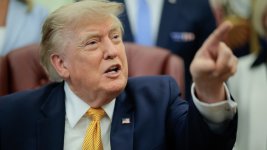
The U.S. presidentlashed outlast week at U.S. oil majors Exxon and Chevron for making "too much money" off higher fuel prices amid the Iran war and reiterated his demand for lower prices at the pump.
"The supermajors enjoyed an unprecedented cash bonanza last quarter," Clark Williams-Derry, energy finance analyst at IEEFA, a non-profit organization, told CNBC by email.
But they didn't use this cash to "drill baby drill," Williams-Derry said, referring to Trump's policy to maximize energy production. He noted, for instance, that Big Oil's capital spending, dividends and buybacks remained stable.
"So, this raises a question: if they didn't give more money to shareholders, what did the supermajors do with the cash windfall?"
In the most part, IEEFA's Williams-Derry said oil companies have sought to stockpile cash reserves and pay down debt to improve their balance sheets. Indeed, the cash reserves of the world's five supermajors jumped by a little over $17 billion on a quarterly basis.
"The cynical way to describe the oil industry's financial playbook is: 'Pray for war.' The supermajors need periodic price spikes -- such as the crises in Ukraine and Iran -- just to shore up their finances," Williams-Derry said.
"For supermajors, intense consumer pain and global fuel shortages function as a financial antidote to the long stretches of low, stable prices that erode their finances. From the perspective of oil majors, price spikes are a feature, not a bug," he added.
Executives at the oil and gas majors told CNBC that they were looking to double down on areas of the business that they can control during the Middle East conflict, such as operational performance, trading and optimization.
"What BP is doing is making sure that we are focused on the things we can do to try to help address the situation. We're driving hard on reliability, both on our upstream assets where we produce those barrels and the refining assets where we refine them," BP CEO Meg O'NeilltoldCNBC's "Squawk Box Europe" on Aug. 4.
O'Neill said the company had made adjustments to how the firm's refining runs are set up to maximize the availability of products consumers most need at any point in time, citing jet fuel and diesel as an example.
Shell CEO Wael Sawan, meanwhile,describedvolatility as "the new normal" and said the macro is such that higher commodity prices had provided a very strong tailwind for its results.
Profit and cashflow bonanza 'may not be sustainable'
Oil and gas majors have already demonstrated how they plan to use their bumper profits and cash flows, according to Russ Mould, investment director at AJ Bell.
"The full range covers mergers and acquisitions, maintenance capex, investment in new projects (renewable or hydrocarbon), debt reduction and, finally, dividends and share buybacks," Mould told CNBC by email.
The extent and degree of each of those varies from company to company, Mould said, with BP in "debt reduction mode," while Shell has been more expansive with an acquisition in Canada, for example.
"What is clear, however, is that the hydrocarbon majors are [approaching] investment in new oil and gas fields with a degree of circumspection, given how overall capex budgets remain on a tight rein," Mould said.
"This may be the result of the feeling that the current profit and cash flow bonanza may not be sustainable, especially if America and Iran come to a lasting, peaceful settlement, or fears of fresh taxation, or ongoing public, political and campaign-group pressure with regard to the environment," he added.
API: Windfall taxes 'don't lower prices for consumers'
Alongside Trump's criticism, political pressure on the oil and gas industry's wartime profits has been growing over recent weeks.
Campaigners havecalledon policymakers to impose higher taxes on energy majors to help fund climate-resilient infrastructure, such as fire and flood defenses.
Portugal's governmentsaidlast week that it had approved a windfall tax on extraordinary profits earned by oil and refining companies in 2026.
The American Petroleum Institute, a lobby group that represents about 600 drilling companies, refiners and other interests, described the oil and gas industry as a cyclical business that should be measured in decades — not quarters — and warned against a windfall tax on excess profits.
"During one of the most significant global energy disruptions in decades, America's oil and natural gas industry is delivering record production and world-leading refining while continuing to invest in the supply, infrastructure and resilience that strengthen America's long-term energy security," an API spokesperson told CNBC by email.
As for windfall taxes, API said it wasn't possible to tax your way to greater energy security. "Windfall profits taxes don't lower prices for consumers—they discourage the long-term investment needed to strengthen supply, infrastructure and a more resilient energy system," they added.


