 Experience Ultra-Low Latency Trading —
  Trade with a Regulated Global Broker
The oil market is experiencing extreme volatility as a result of the armed conflict between the US and Iran. Although physical supplies are facing drastic disruptions in the Strait of Hormuz and the Red Sea, global refineries are recording record margins, and the market is actively analyzing every signal that could indicate an impending de-escalation or further spread of the conflict.
Escalation between the US and Iran
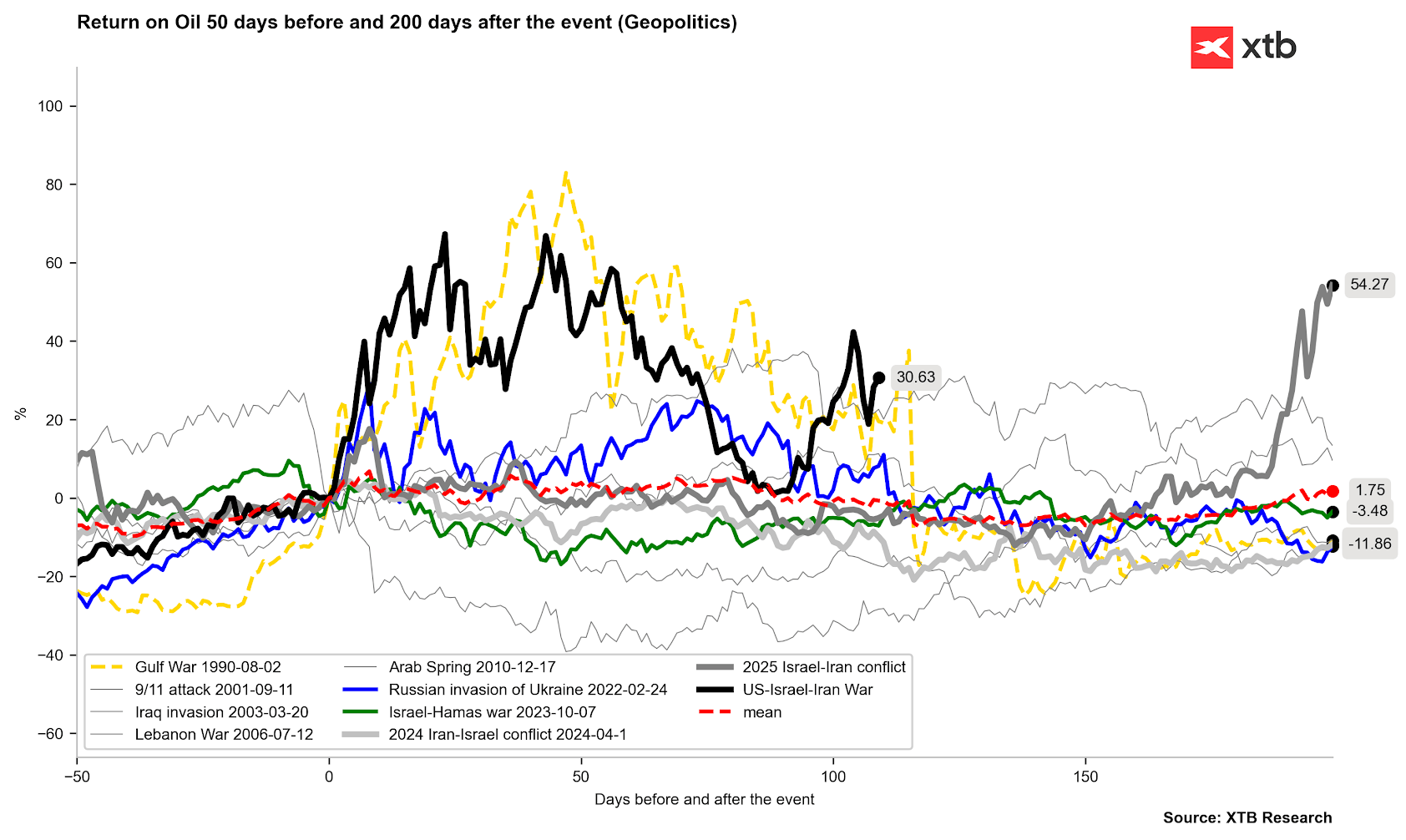
The current situation in the Middle East remains very tense, following the return to mutual attacks by the United States and Iran. The United States has decided to return to shelling Iranian positions, which was a direct response to the attack on an American military base. President Donald Trump publicly announced firm and “very strong” strikes on Wednesday evening, which sharply increased the risk premium on the commodity market and dampened the positive sentiment that had prevailed on the stock market following Kevin Warsh’s conference.
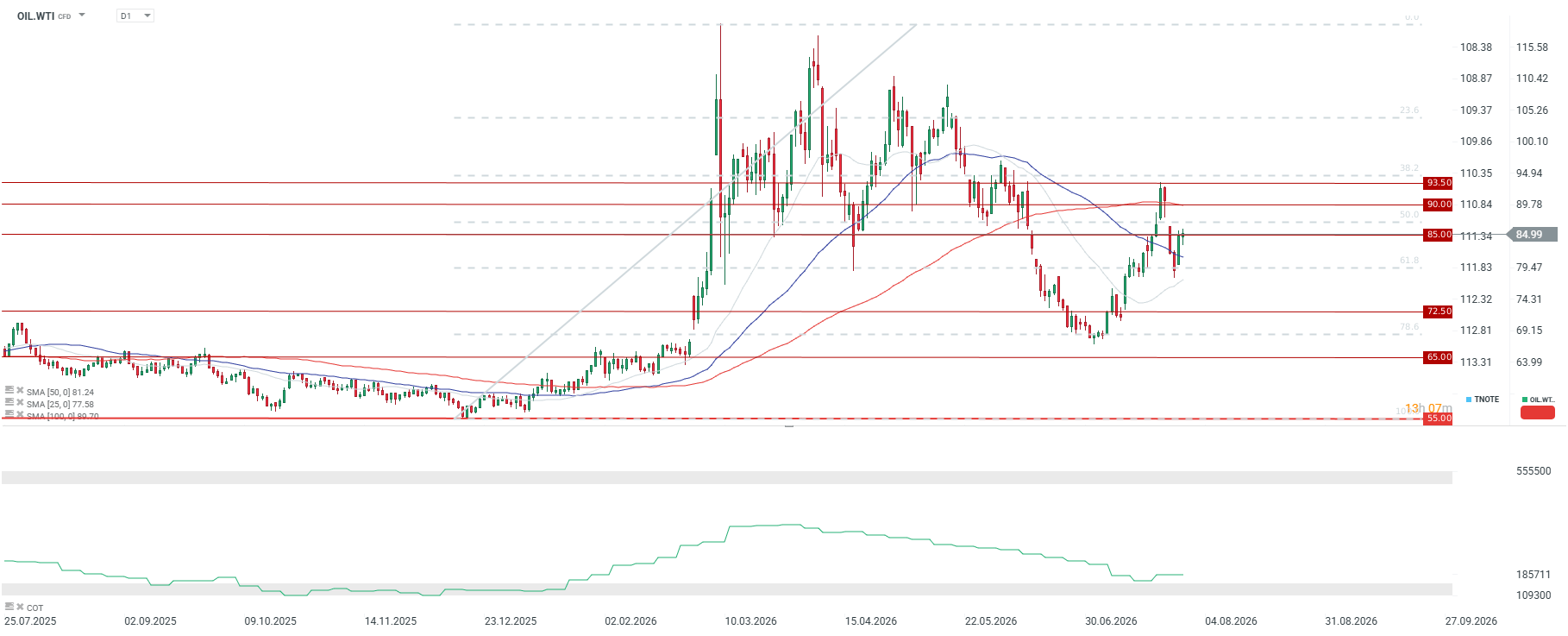
It is worth noting that following the recent de-escalation, which lowered WTI oil prices from approximately 93 USD to 80 USD, we are currently observing a retracement of the downward move by roughly half. WTI oil is testing a key resistance level around 85 USD and the 50.0 retracement of the entire upward wave from the start of the conflict.
Ship flow: Hormuz and alternative routes
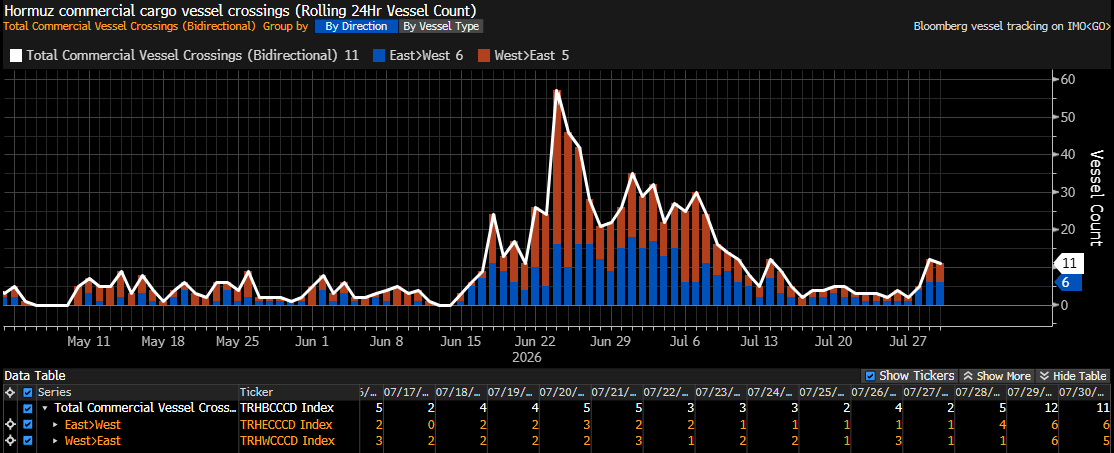
The Strait of Hormuz remains absolutely crucial for the global situation on the oil market, although strong increases in recent weeks were also linked to Houthi attacks in the Bab el-Mandab Strait.
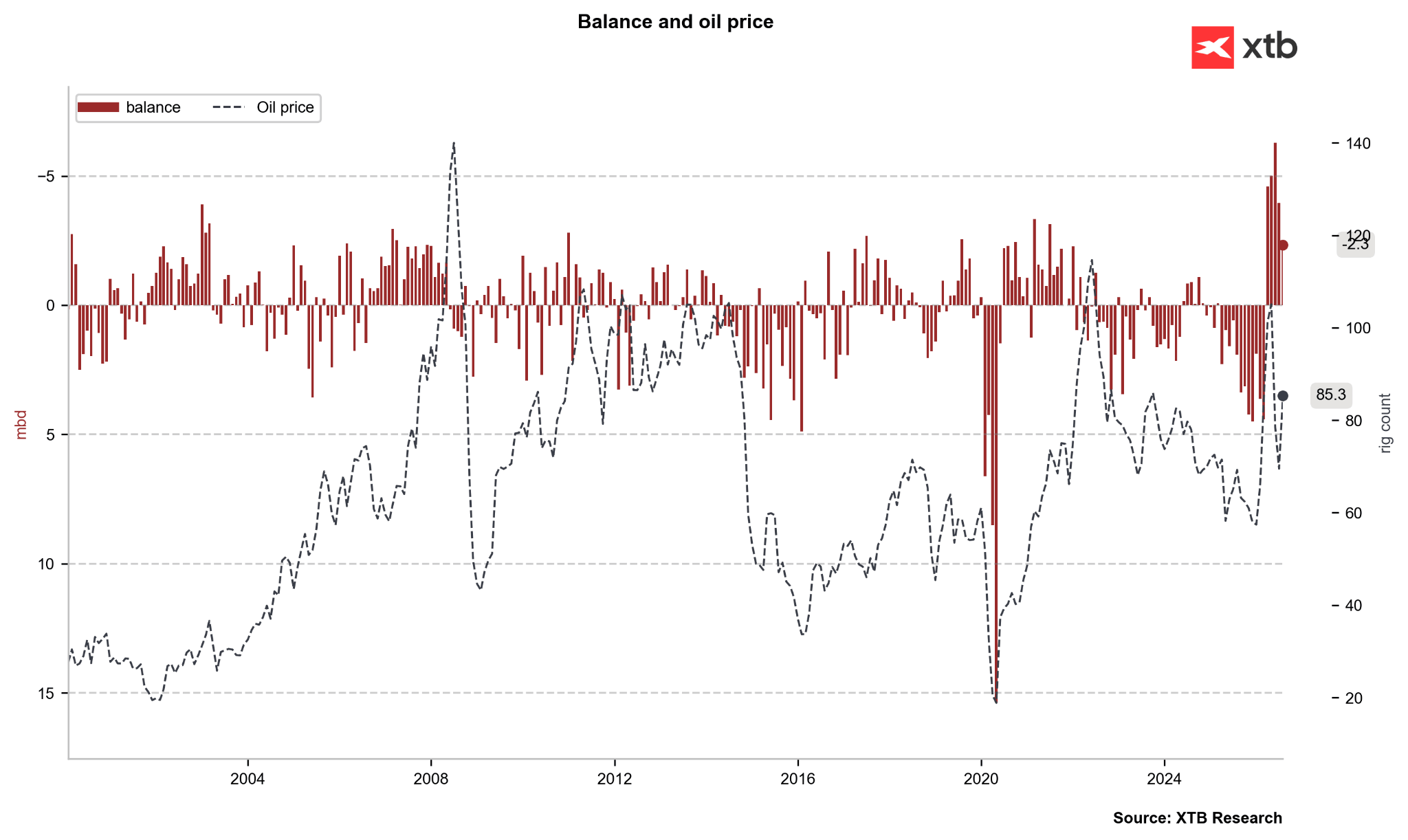
Despite strong restrictions, it is currently estimated that up to 13 million barrels of oil may be flowing from the Persian Gulf, which, given the clear reduction in global demand (so-called demand destruction), clearly limits the deficit.
Refining boom and inventory drainage
The geopolitical earthquake has an asymmetric, but very deep, impact on the oil economy. The lack of free flow of cheap oil led to a surge in prices of finished fuels (gasoline, diesel, jet fuel) well above the valuation of the raw material itself, which triggered a historical boom in the refining sector.
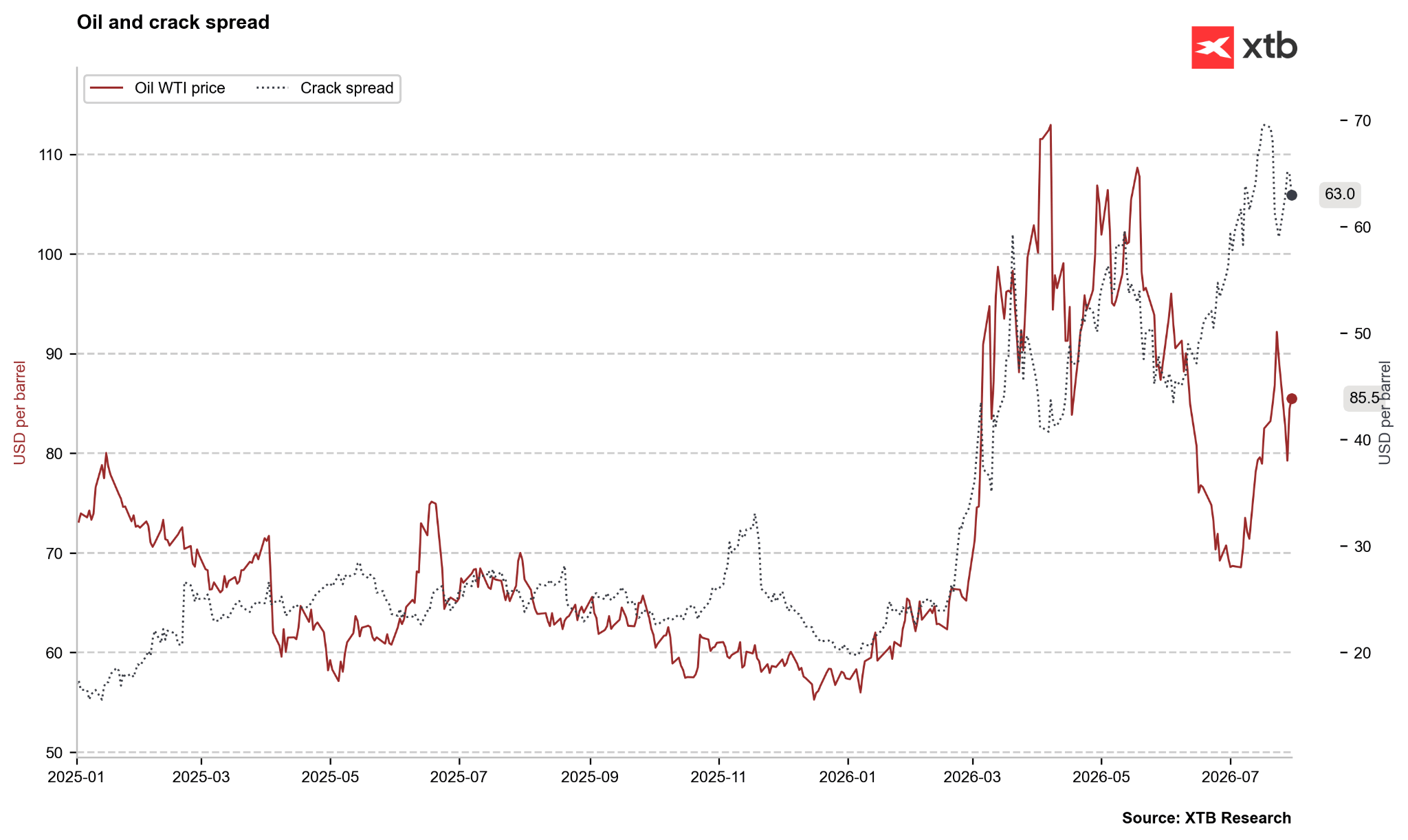
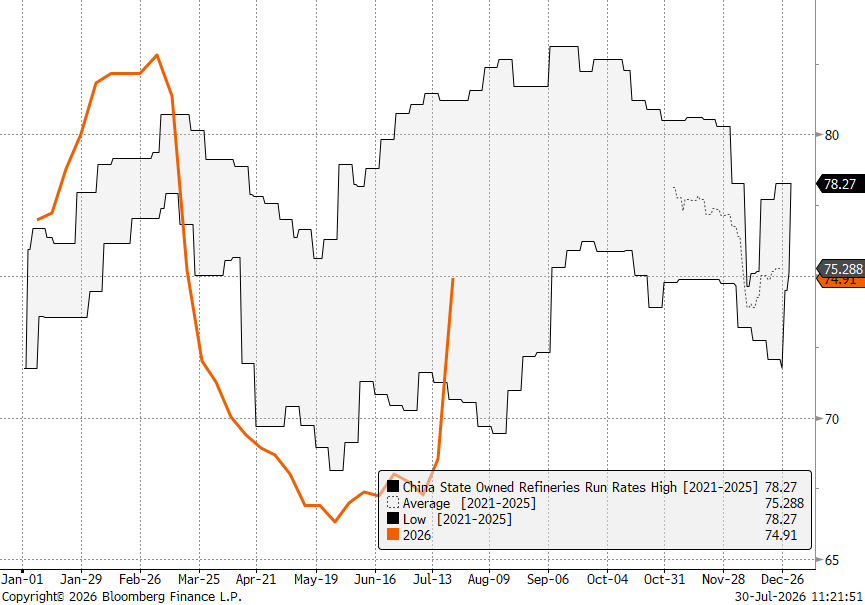
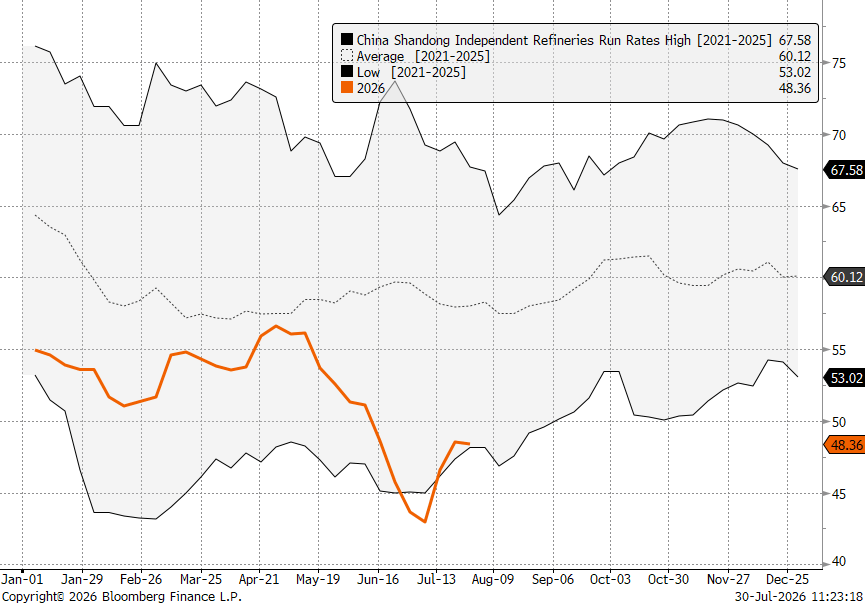
Global refining giants are working at maximum capacity. For example, Shell reported refinery utilization at an unprecedented level of 102% (100% capacity is only a value on paper, but in reality, processing may be higher than what would result from the declared values), and jet fuel production jumped by 20% year-on-year. Thanks to record-high margins (crack spreads), profits from trading and refining have skyrocketed. However, increased refinery activity and massive raw material processing have led to a rapid drainage of commercial oil inventories in the US, which have fallen to levels described by experts as “dangerously low.”
Economic costs for producers and price prospects
While traders and refineries are recording above-average profits, producers themselves are feeling the painful effects of the war. The Saudi Arabian economy recorded a 4.8% year-on-year drop in GDP in the second quarter, which is the worst result since the pandemic in 2020. The direct cause is the collapse in the Saudi oil sector, which shrank by nearly 25%. Raw material extraction remains well below pre-war norms, and immobilized infrastructure (including in Qatar, which affected Shell’s LNG production) limits supply.
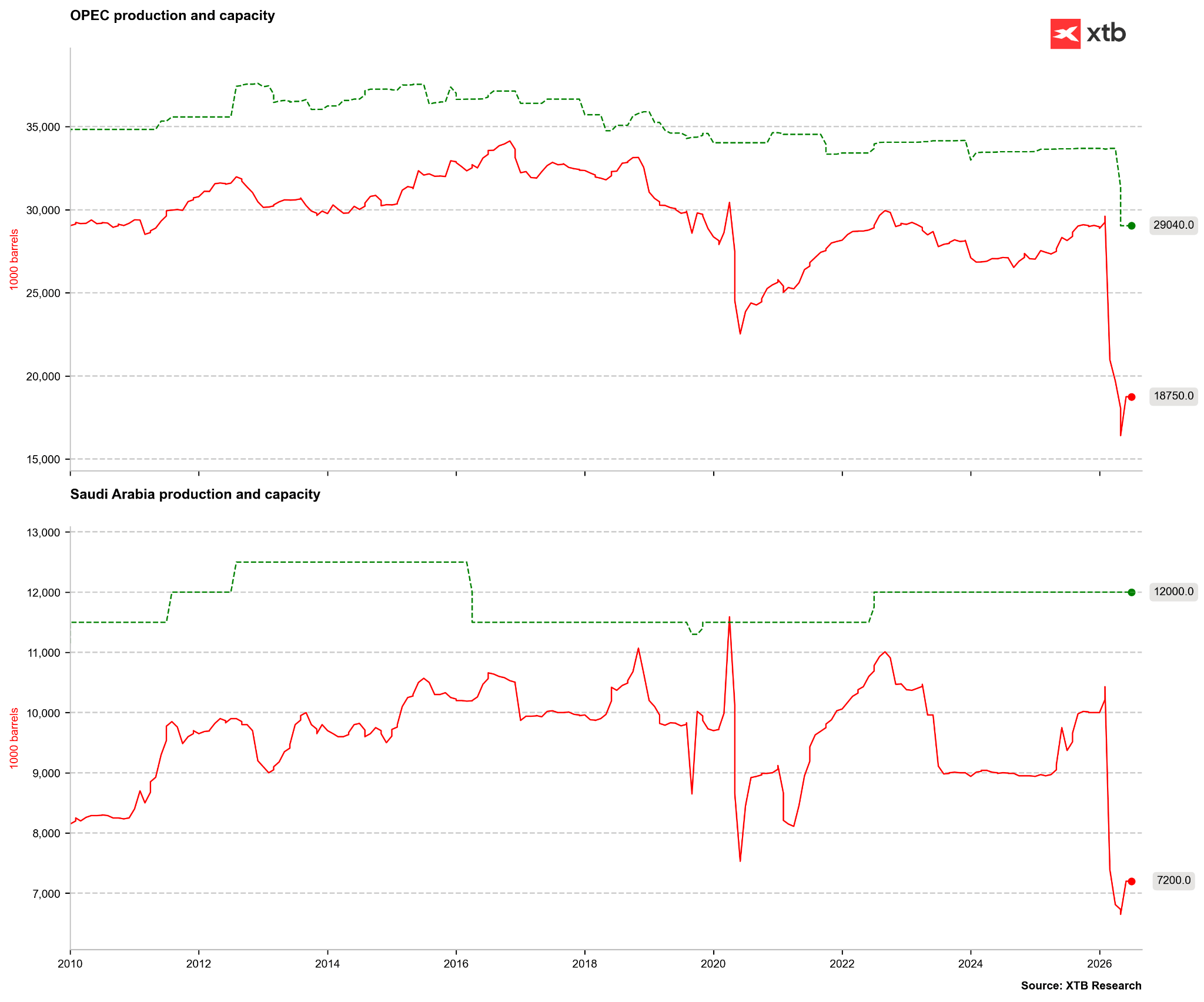
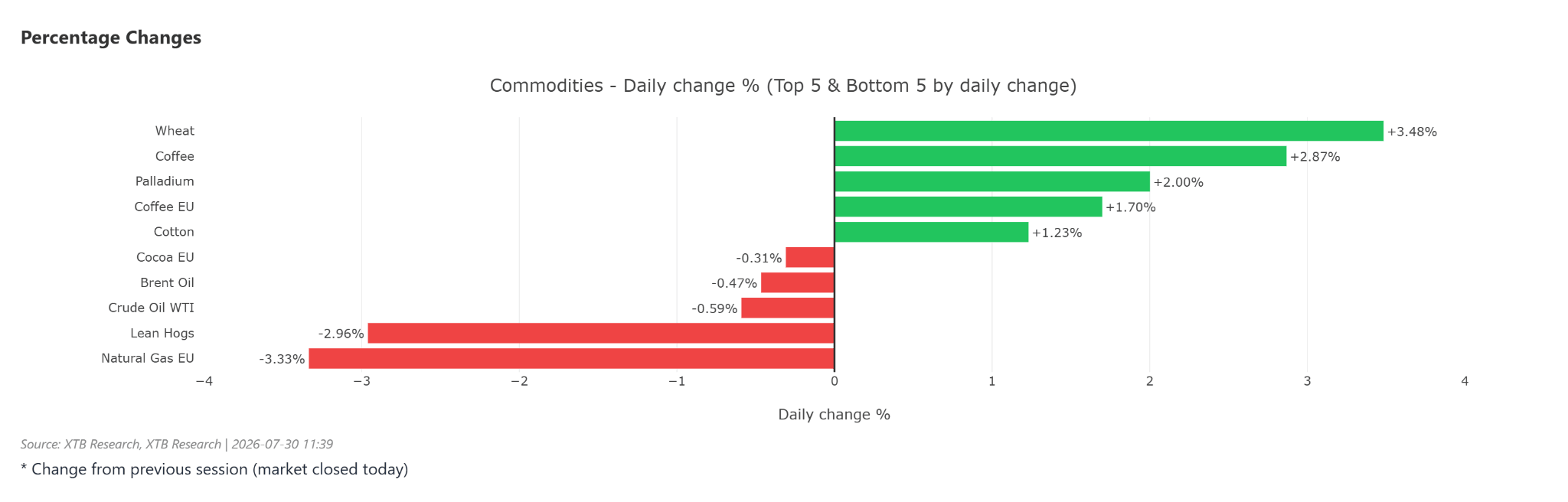
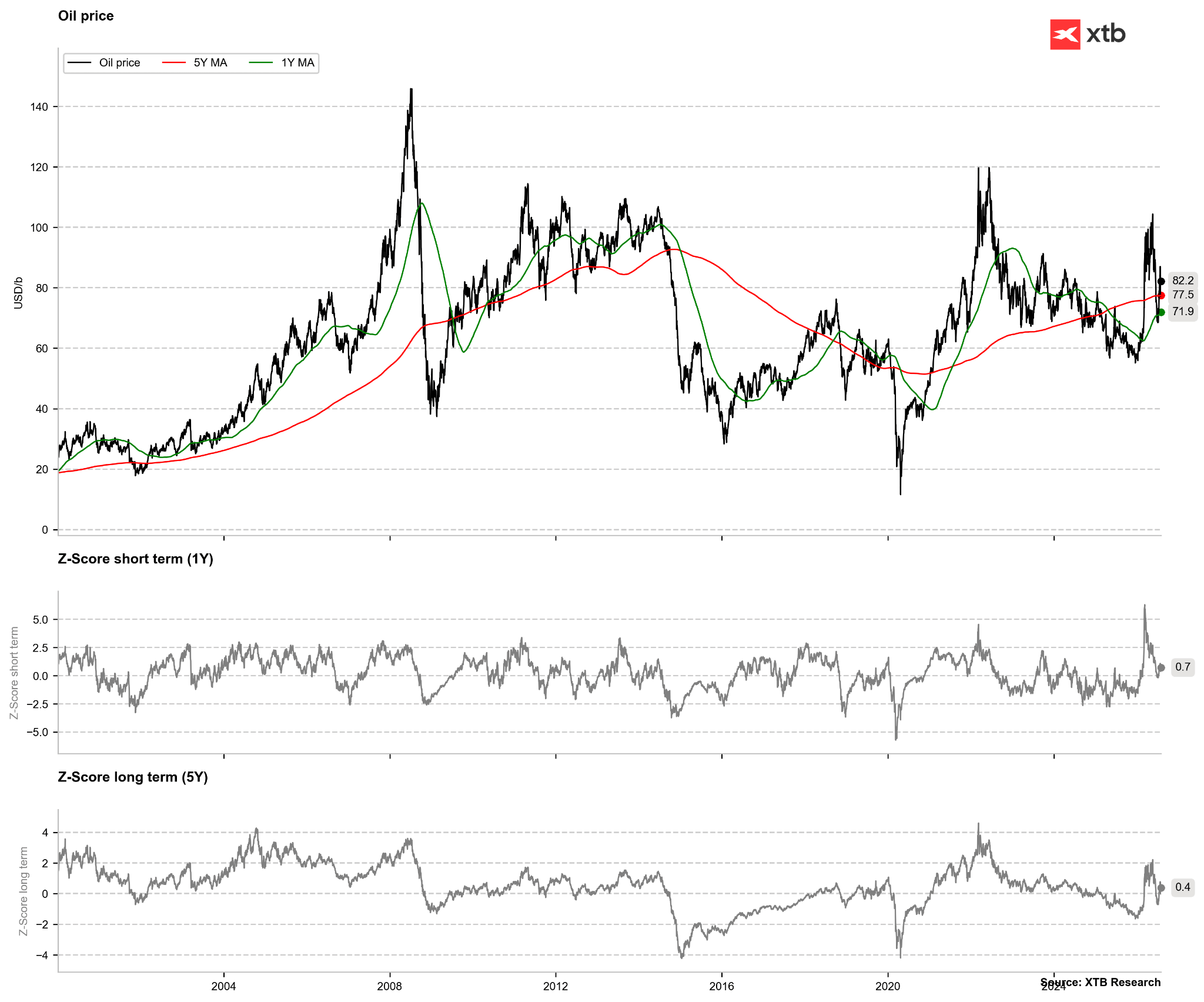
Prices on the markets are still characterized by high volatility. Brent crude prices are oscillating around 88 USD, while American WTI oil is valued at approximately 84-85 USD.
XTB.COM


