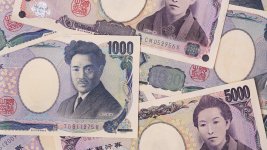
The Japanese yen has erased about half the gains from ahistoric U.S.-Japan interventionless than two weeks ago, as the fundamental forces that have pressured the currency to multi-decade lows prove increasingly resilient against short-term measures.
Japan's currency is currently trading at over 159 per dollar, after having strengthened to 155 in the days following theinterventionafter it crossed 163.
"Intervention has scared markets, but has not stopped the laws of finance which say money flows in the direction of maximum returns … as long as the cost of money in Japan is lower than the return overseas, carry trades will re-assert," said Jesper Koll, expert director at Monex Group.
At the heart of the problem is the gap in returns between Japan and the U.S. With Japanese borrowing costs still far below those in the U.S. and other markets, prompting investors to borrow cheaply in yen and invest in higher-yielding assets, also known as the classic carry trade.
The backdrop has become even tougher as higher Treasury yields and elevated oil prices, which pose a particular problem for energy-importing Japan, restore some of the macro forces favoring the dollar.
He argues that intervention has succeeded in reducing speculative excess and raising the risks for traders betting against the yen, even if it has not eliminated the underlying yield advantage supporting the dollar.
"The intervention successfully reset market psychology and demonstrated an unusually strong degree of U.S.-Japan policy coordination. What it has not yet done is eliminate the yield advantage supporting the dollar," said Masahiko Loo, senior fixed income and currency strategist at State Street Global Advisors.
The yield gap remains wide: benchmark 10-year U.S. Treasury yield is at 4.686%, compared with 2.846% for 10-year Japanese government bonds, leaving investors with a substantial incentive for holding U.S. debt.
"It's better understood as a success in slowing speculation but not yet a success in changing fundamentals," Loo said.
That leaves attention squarely on the Bank of Japan, whose next monetary policy meeting is scheduled for September.
Monex's Koll said the bigger shock for investors was not intervention itself but the BOJ's reluctance to tighten policy more aggressively, which raises questions over whether concerns about the banking system or Japan's enormous public debt burden are constraining policymakers.
In the absence of higher Japanese rates or falling U.S. yields, investors still have an incentive to send money overseas.
John Wood, chief investment officer for Asia at Lombard Odier, said the latest intervention would probably have "a limited time effect," arguing the BOJ might need at least two more rate increases to draw a line under the currency's weakness.
Yet interest rates may only be part of the explanation.
Crédit Agricole CIB says that the deeper problem is an "asymmetry of investment power" between the two economies. Massive U.S. investment in artificial intelligence and other projects continues to attract capital, while Prime Minister Sanae Takaichi's planned public-private investment push has yet to fully materialize.
"What is needed to correct the weak yen is not interest rate hikes, but to expand investment," it said.
That suggests a sustainable yen recovery ultimately requires Japanese assets themselves to become more attractive, encouraging domestic savings to remain at home rather than chase returns abroad.
For now, intervention might function less as a mechanism for reversing the yen's decline than as a guardrail against its acceleration.
State Street's Loo said the 160 level has become "a political line in the sand," meaning another rapid move through that threshold could draw officials back into the market.
"I would not rule out another intervention, particularly if the move becomes rapid or disorderly," he said. "Ultimately, though, intervention can buy time, but the heavy lifting will fall on BOJ normalization as early as September."
Washington and Tokyo have also sought to strengthen that deterrent by highlighting the Federal Reserve's foreign and international monetary authorities' repo facility, which can provide dollar liquidity against Treasury securities and reduce the need for Japan to sell its U.S. bond holdings to finance intervention. Treasury Secretary Scott Bessent has signaled support for expanding the backstop.
That makes it potentially more expensive to keep betting against the yen, but it doesn't make the underlying trade disappear.
"Scaring markets is easy, getting markets to follow needs changed incentives and trust," said Koll.


