Global financial markets are navigating a complex interplay of central bank interventions, shifting monetary policy expectations, and heavy structural debt issuance across both major Western and Asian economies. In the foreign exchange arena, the People’s Bank of China continues to demonstrate unwavering resolve in managing the renminbi's trajectory, carefully balancing market-driven dollar weakness with deliberate policy damping mechanisms. Meanwhile, in the United States, recent inflation data releases have validated a disinflationary narrative, propelling equity benchmarks like the S&P 500 to record closing highs while simultaneously shaping the Federal Reserve's policy reaction function for the upcoming September meeting. However, underlying structural forces—including relentless Treasury issuance and massive corporate debt demands tied to artificial intelligence infrastructure financing—continue to exert upward pressure on long-term bond yields and term premiums. As technical traders and macro strategists digest these crosscurrents, understanding the critical support and resistance thresholds across foreign exchange pairs, sovereign yield curves, and major equity indices remains paramount for navigating current market sentiment.
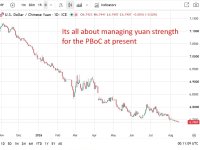
The USD/CNY currency pair remains one of the most closely watched barometers in Asian foreign exchange, particularly as the PBOC signals its preference for a gradual, controlled currency path over an aggressive yuan rally. Despite a softening dollar index and an onshore spot rate closing firmer at the end of last week, the reference rate fix continues to reflect official caution. Market participants anticipate that the central bank will lean heavily on its damping mechanism to slow the pace of yuan appreciation, potentially widening the gap between the official fix and baseline market expectations to around 500 pips.
From a technical analysis perspective, USD/CNY is hovering near critical structural boundaries. The daily midpoint is projected to push above the 42-month low of 6.7878 recorded previously, testing key resistance zones established by policymakers. China’s managed floating exchange rate system allows a prescribed plus or minus 2 percent trading band around the daily midpoint. Within this framework, technical traders are closely monitoring key support levels near 6.7414, where central bank intervention via state-owned banks or liquidity adjustments has historically materialized to smooth volatility. Market sentiment remains cautious, as institutional investors interpret each daily fixing not merely as a technical reference point, but as a deliberate policy signal balancing trade competitiveness and financial stability.
In the United States, incoming macroeconomic prints continue to dictate the narrative for fixed-income assets and equity markets alike. Last week's Consumer Price Index print landed largely in line with expectations, with core metrics pointing toward a softer reading for the Federal Reserve’s preferred core Personal Consumption Expenditures gauge due to favorable weightings in soft services categories. This was swiftly followed by a cooler-than-expected Producer Price Index reading, which provided the necessary catalyst to drive the S&P 500 to a record closing high.
Bond markets rallied modestly following the inflation releases, with pricing for the Federal Reserve's September meeting easing slightly. According to analysis from Goldman Sachs, inflation retains absolute primacy in the central bank's reaction function, overshadowing recent softer employment figures and negative job growth prints. Demographic shifts and immigration policy adjustments mean the labor market requires minimal job creation to maintain a stable unemployment rate. Consequently, short-term rate pricing reflects a fair-value baseline at the front end of the curve. However, structural headwinds persist at the long end. Heavy Treasury supply and record corporate debt issuance—driven heavily by the massive capital expenditure requirements of the artificial intelligence infrastructure buildout—are cementing an expanding term premium. The bank's preferred positioning strategy under these structural conditions remains a curve steepener trade, capitalizing on front-end anchoring against ongoing long-term yield pressures.
Market sentiment across global macro desks reflects a delicate balancing act between optimism over cooling inflation prints and caution regarding structural fiscal realities. While equity markets celebrate record highs fueled by disinflationary momentum and robust demand in technology sectors, fixed-income investors must contend with heavy sovereign and corporate debt issuance calendars. Recent 10-year and 30-year Treasury auctions have been absorbed smoothly, aided by the disinflation narrative, yet higher long-term yields continue to act as a natural substitute for further policy rate hikes by the Federal Reserve.
For institutional traders and portfolio managers, current technical formations suggest defensive agility. In the currency markets, monitoring the divergence between PBOC fixings and spot market dynamics will provide early clues regarding Asian monetary policy shifts. In fixed income, maintaining curve steepener strategies offers the most resilient expression against structural term premium expansion, while keeping a close watch on key support and resistance levels across major equity indices will help mitigate risks associated with sudden macroeconomic surprises.
PBOC Policy Stance and USD/CNY Technical Landscape
The USD/CNY currency pair remains one of the most closely watched barometers in Asian foreign exchange, particularly as the PBOC signals its preference for a gradual, controlled currency path over an aggressive yuan rally. Despite a softening dollar index and an onshore spot rate closing firmer at the end of last week, the reference rate fix continues to reflect official caution. Market participants anticipate that the central bank will lean heavily on its damping mechanism to slow the pace of yuan appreciation, potentially widening the gap between the official fix and baseline market expectations to around 500 pips.
From a technical analysis perspective, USD/CNY is hovering near critical structural boundaries. The daily midpoint is projected to push above the 42-month low of 6.7878 recorded previously, testing key resistance zones established by policymakers. China’s managed floating exchange rate system allows a prescribed plus or minus 2 percent trading band around the daily midpoint. Within this framework, technical traders are closely monitoring key support levels near 6.7414, where central bank intervention via state-owned banks or liquidity adjustments has historically materialized to smooth volatility. Market sentiment remains cautious, as institutional investors interpret each daily fixing not merely as a technical reference point, but as a deliberate policy signal balancing trade competitiveness and financial stability.
US Inflation Data, Federal Reserve Outlook, and Yield Curve Dynamics
In the United States, incoming macroeconomic prints continue to dictate the narrative for fixed-income assets and equity markets alike. Last week's Consumer Price Index print landed largely in line with expectations, with core metrics pointing toward a softer reading for the Federal Reserve’s preferred core Personal Consumption Expenditures gauge due to favorable weightings in soft services categories. This was swiftly followed by a cooler-than-expected Producer Price Index reading, which provided the necessary catalyst to drive the S&P 500 to a record closing high.
Bond markets rallied modestly following the inflation releases, with pricing for the Federal Reserve's September meeting easing slightly. According to analysis from Goldman Sachs, inflation retains absolute primacy in the central bank's reaction function, overshadowing recent softer employment figures and negative job growth prints. Demographic shifts and immigration policy adjustments mean the labor market requires minimal job creation to maintain a stable unemployment rate. Consequently, short-term rate pricing reflects a fair-value baseline at the front end of the curve. However, structural headwinds persist at the long end. Heavy Treasury supply and record corporate debt issuance—driven heavily by the massive capital expenditure requirements of the artificial intelligence infrastructure buildout—are cementing an expanding term premium. The bank's preferred positioning strategy under these structural conditions remains a curve steepener trade, capitalizing on front-end anchoring against ongoing long-term yield pressures.
Market Sentiment and Strategic Positioning for Institutional Traders
Market sentiment across global macro desks reflects a delicate balancing act between optimism over cooling inflation prints and caution regarding structural fiscal realities. While equity markets celebrate record highs fueled by disinflationary momentum and robust demand in technology sectors, fixed-income investors must contend with heavy sovereign and corporate debt issuance calendars. Recent 10-year and 30-year Treasury auctions have been absorbed smoothly, aided by the disinflation narrative, yet higher long-term yields continue to act as a natural substitute for further policy rate hikes by the Federal Reserve.
For institutional traders and portfolio managers, current technical formations suggest defensive agility. In the currency markets, monitoring the divergence between PBOC fixings and spot market dynamics will provide early clues regarding Asian monetary policy shifts. In fixed income, maintaining curve steepener strategies offers the most resilient expression against structural term premium expansion, while keeping a close watch on key support and resistance levels across major equity indices will help mitigate risks associated with sudden macroeconomic surprises.
Introduction to Macro Currents


